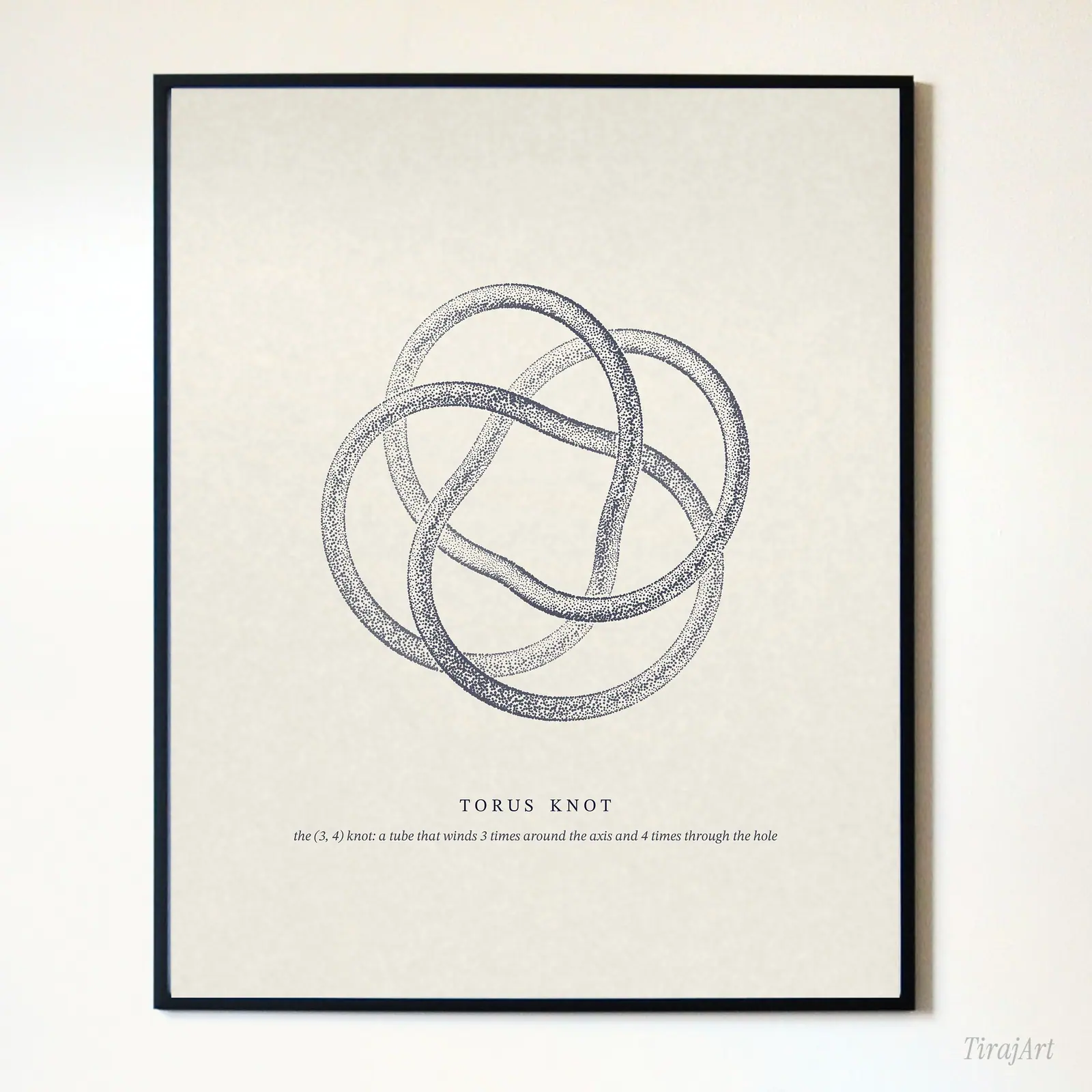
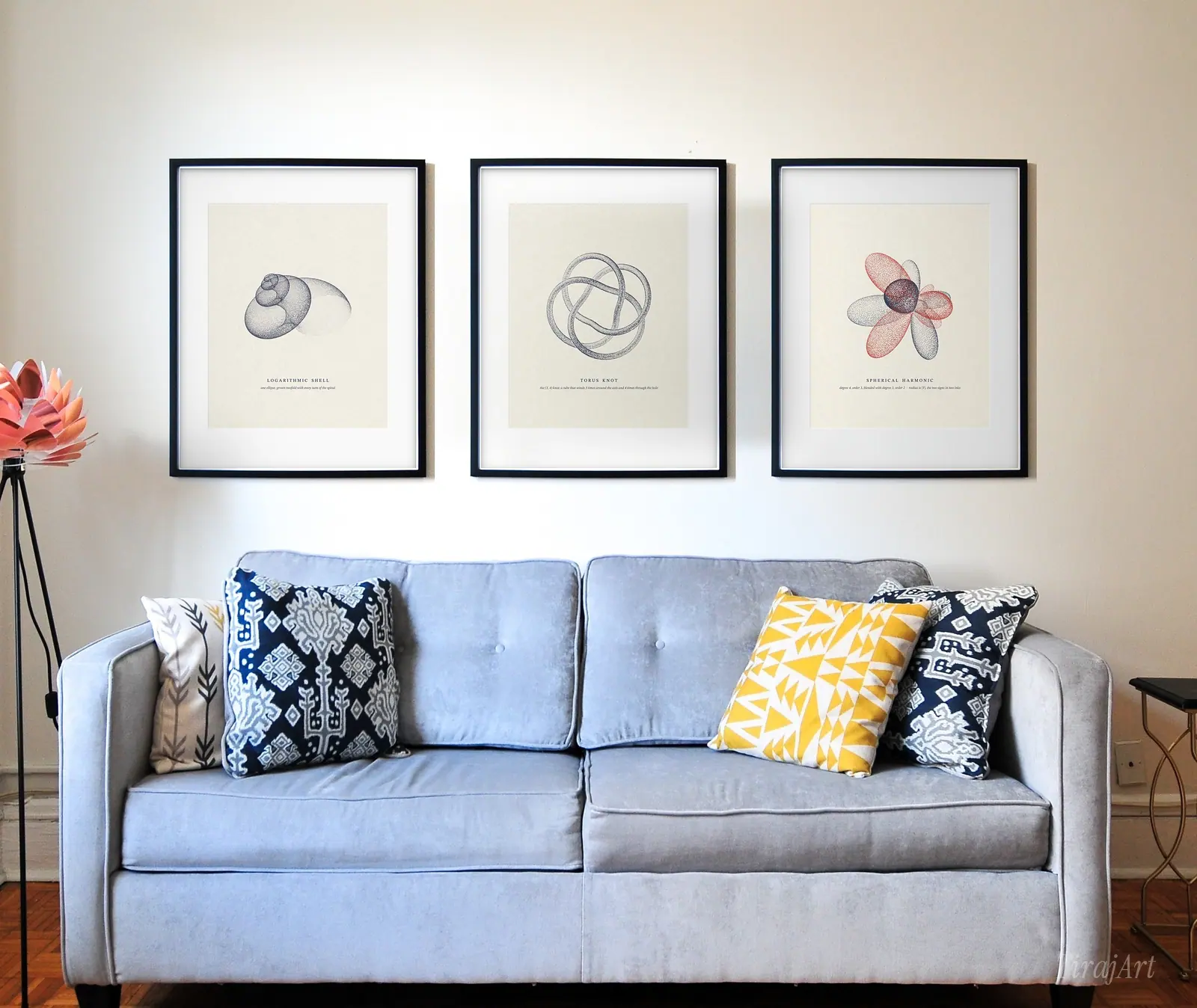
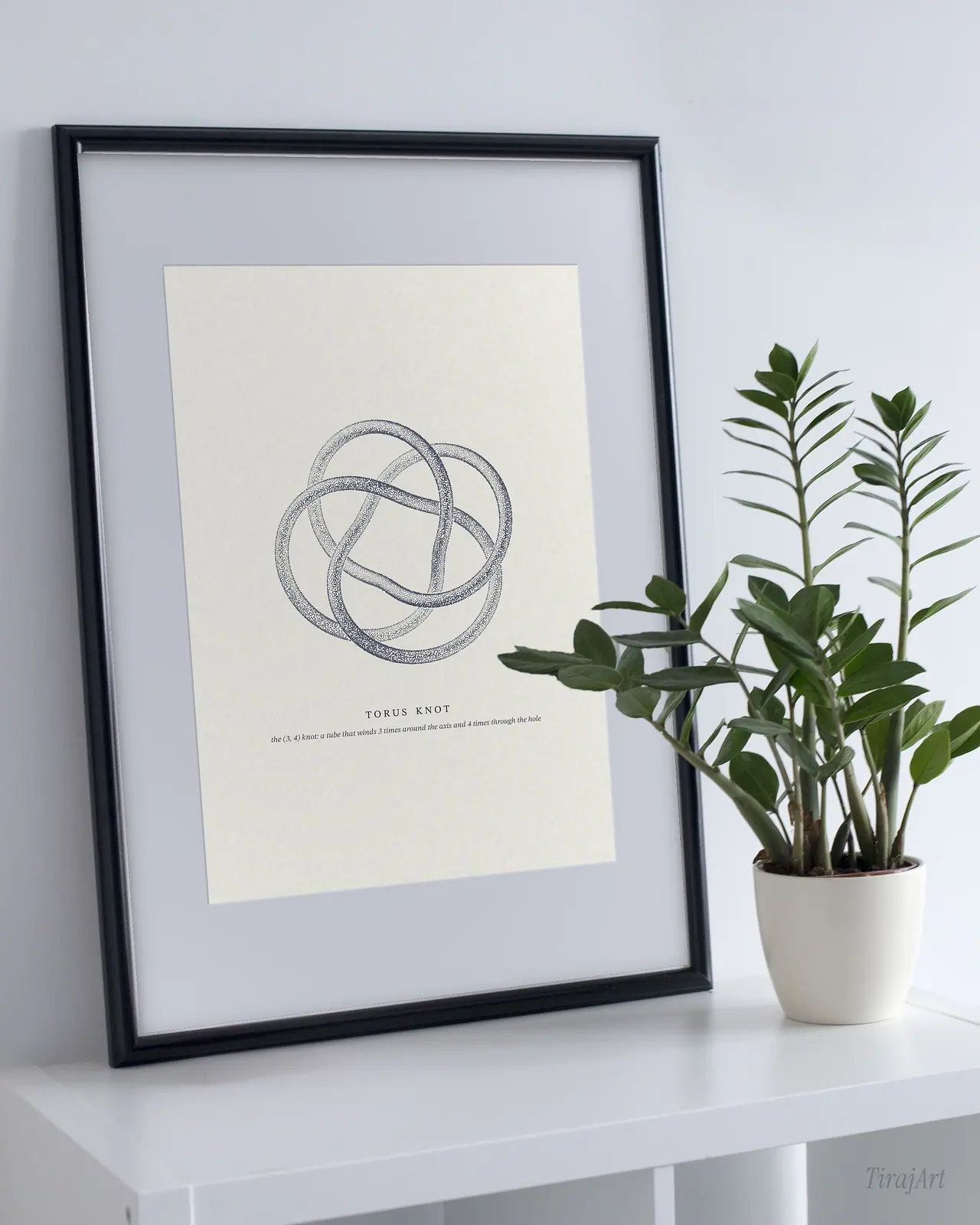
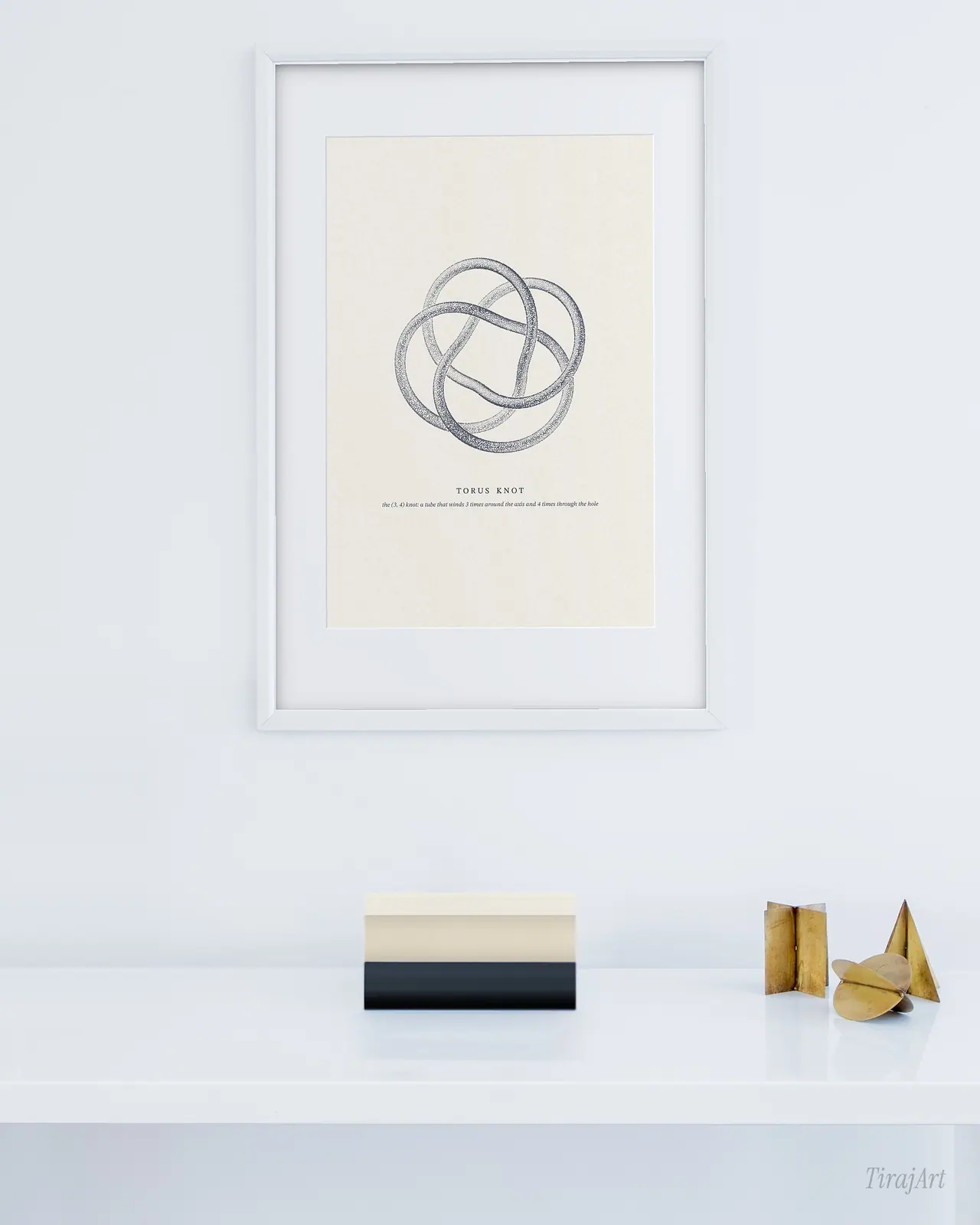
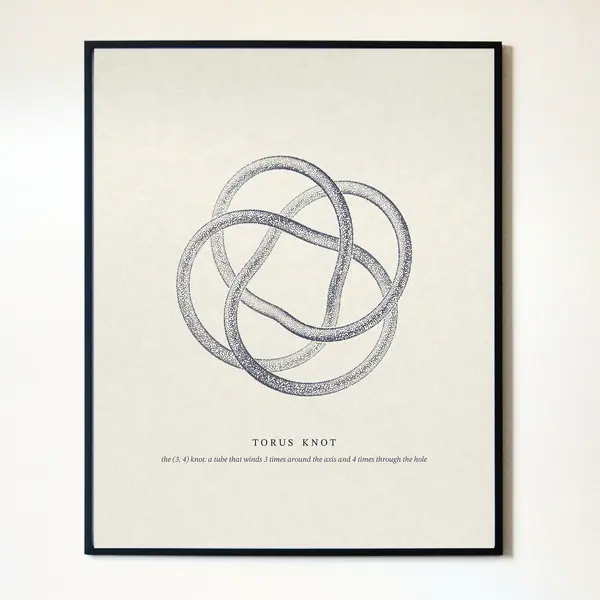
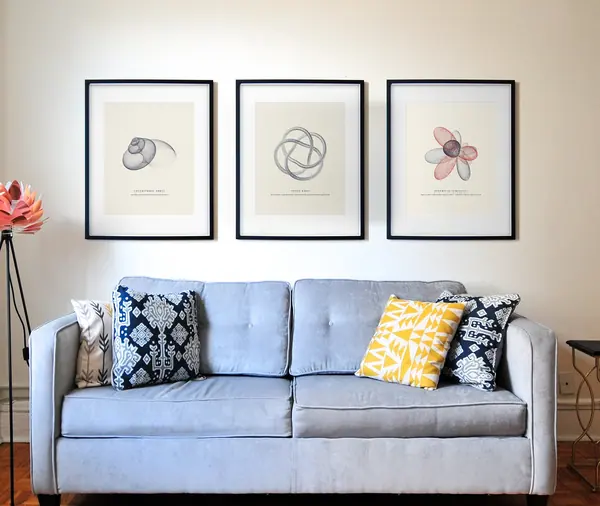
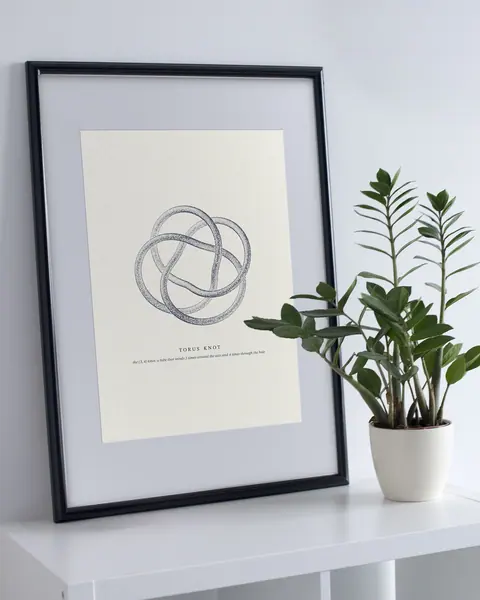
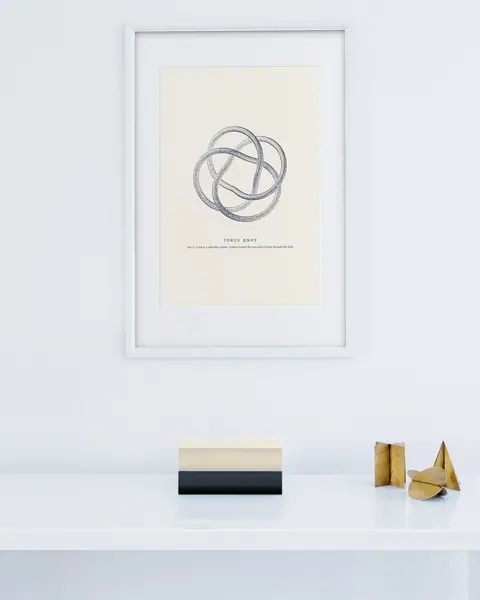
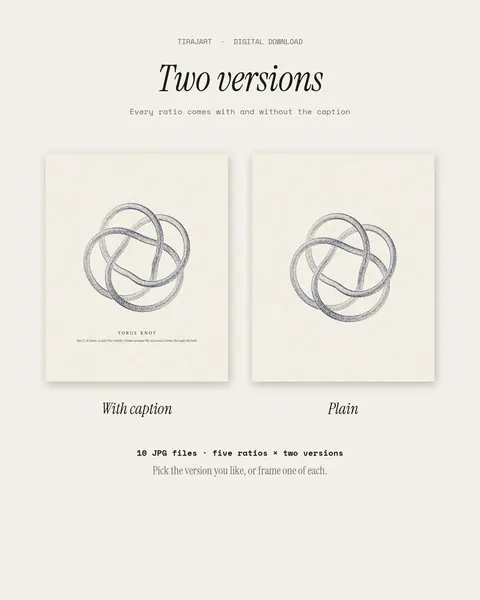
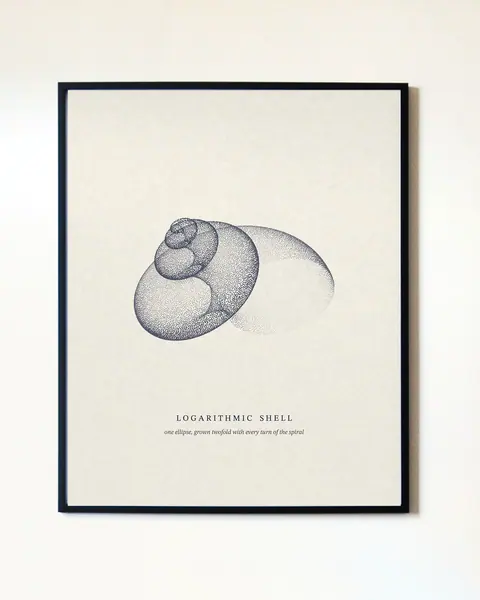
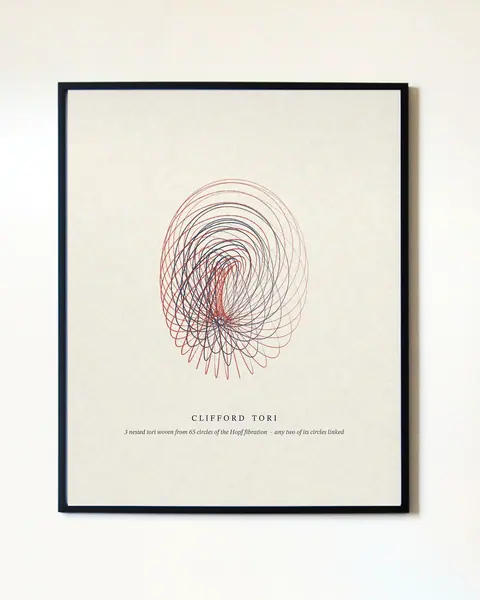
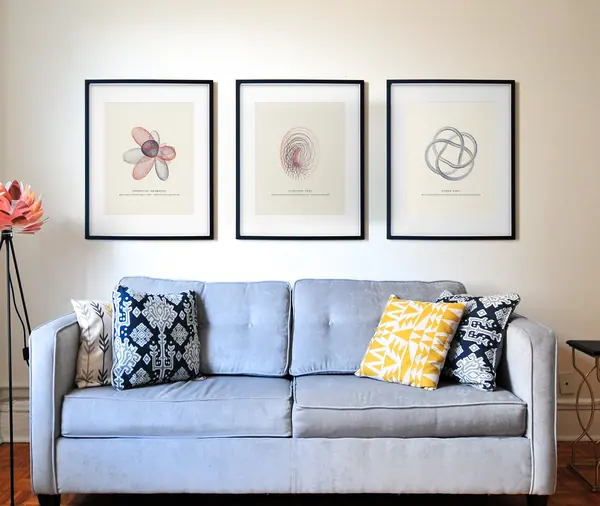
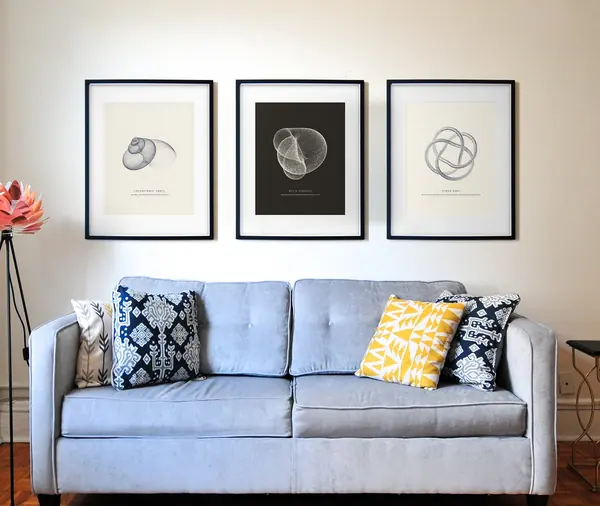
The (3, 4) torus knot as a solid tube that winds three times around its axis and four times through the hole, shaded in dots of deep navy ink on cream like an engraving.
The mathematics
A torus knot is a closed loop drawn on the surface of a doughnut. It goes p times around the central axis and q times through the hole, and when p and q are both greater than 1 and have no common factor, the loop closes up into a true knot that cannot be untangled without cutting it. The (2, 3) knot is the ordinary trefoil; the (3, 4) knot drawn here is the one listed in knot tables as 8₁₉, with eight crossings, and it is among the first knots that cannot be drawn with its crossings alternating over and under. The first knot tables were drawn up after Lord Kelvin suggested that atoms might be knotted rings in the ether, when Peter Guthrie Tait set out to list every knot.
The print
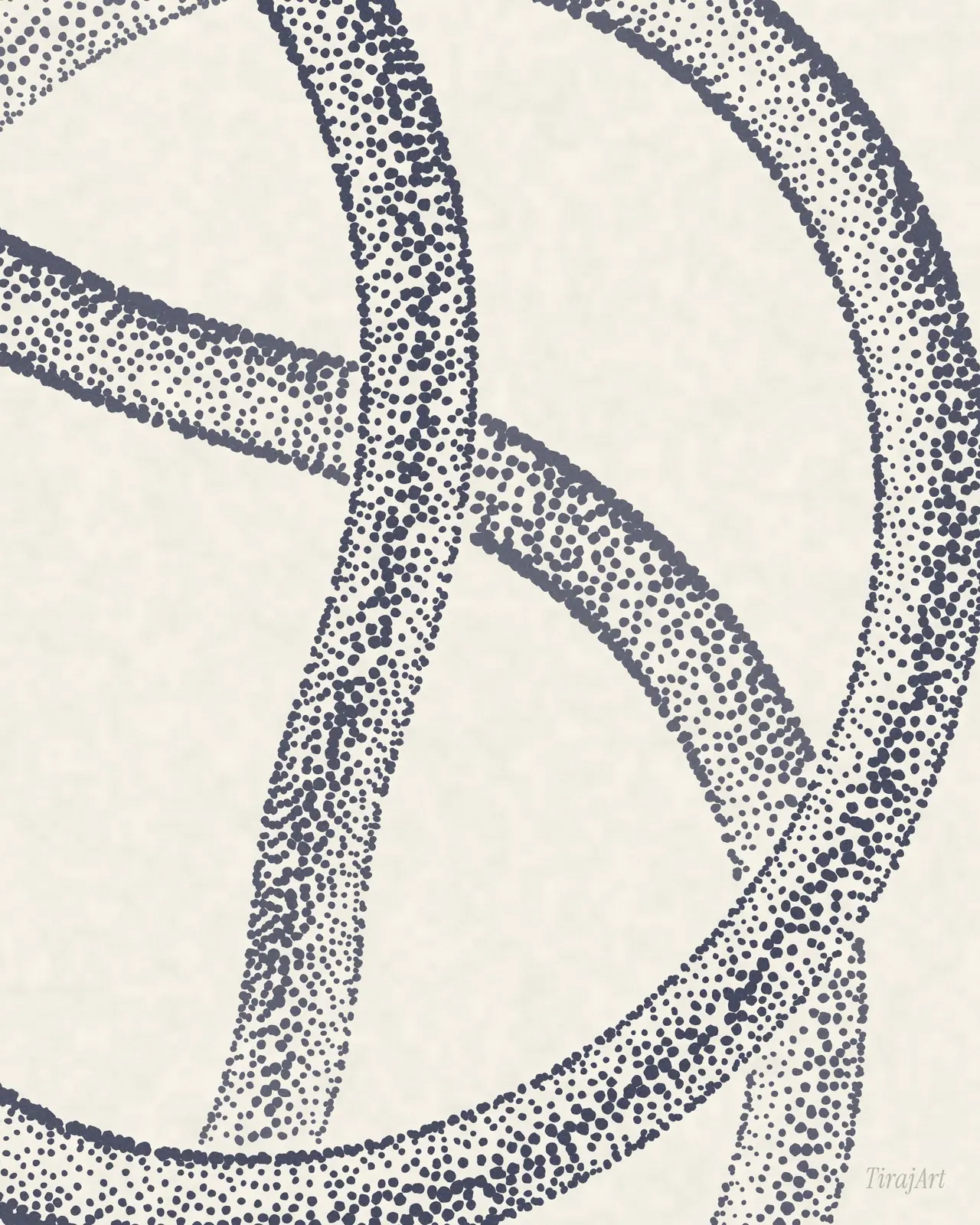
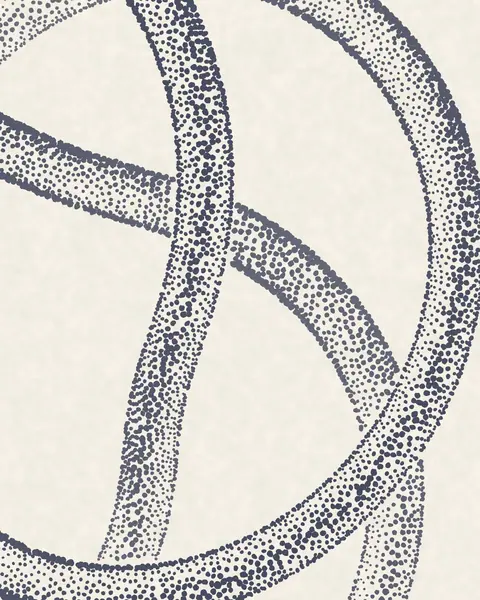
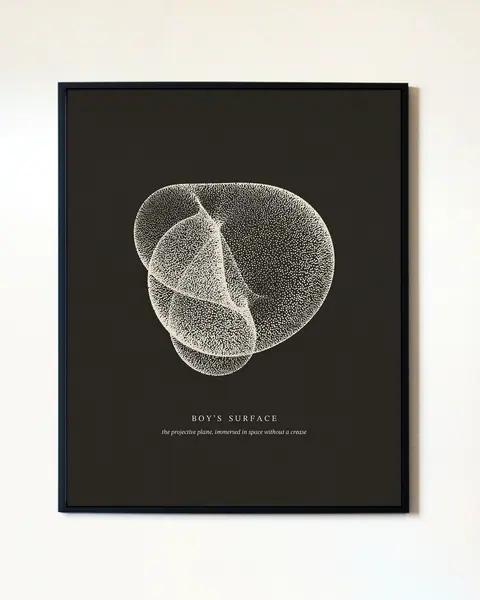
Every dot sits on the surface itself, spaced evenly like the stippling of an old engraving, and is sized by the light: dots grow where the surface turns away, so the form is shaded by dots alone. The drawing comes straight from the mathematics, with no AI and no stock imagery, and each dot keeps a slightly irregular, inked edge. The tube is solid: where it passes behind itself the hidden part is left out, so every crossing reads clearly over and under. It is printed in deep navy ink on a warm cream sheet.
The paper tone is part of the artwork; print on white matte paper. The cream sheet and the soft ink texture are printed into the file.
What’s included
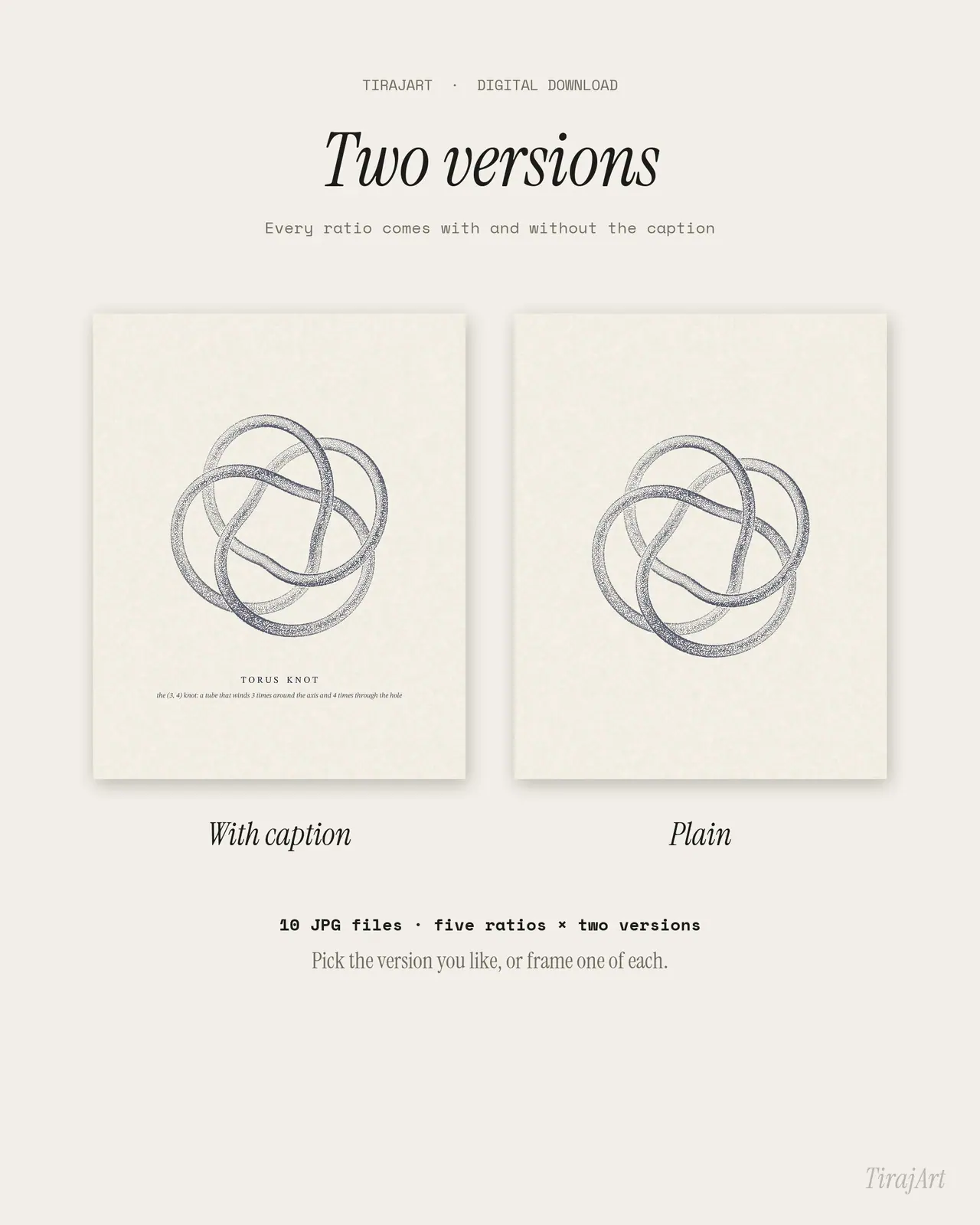
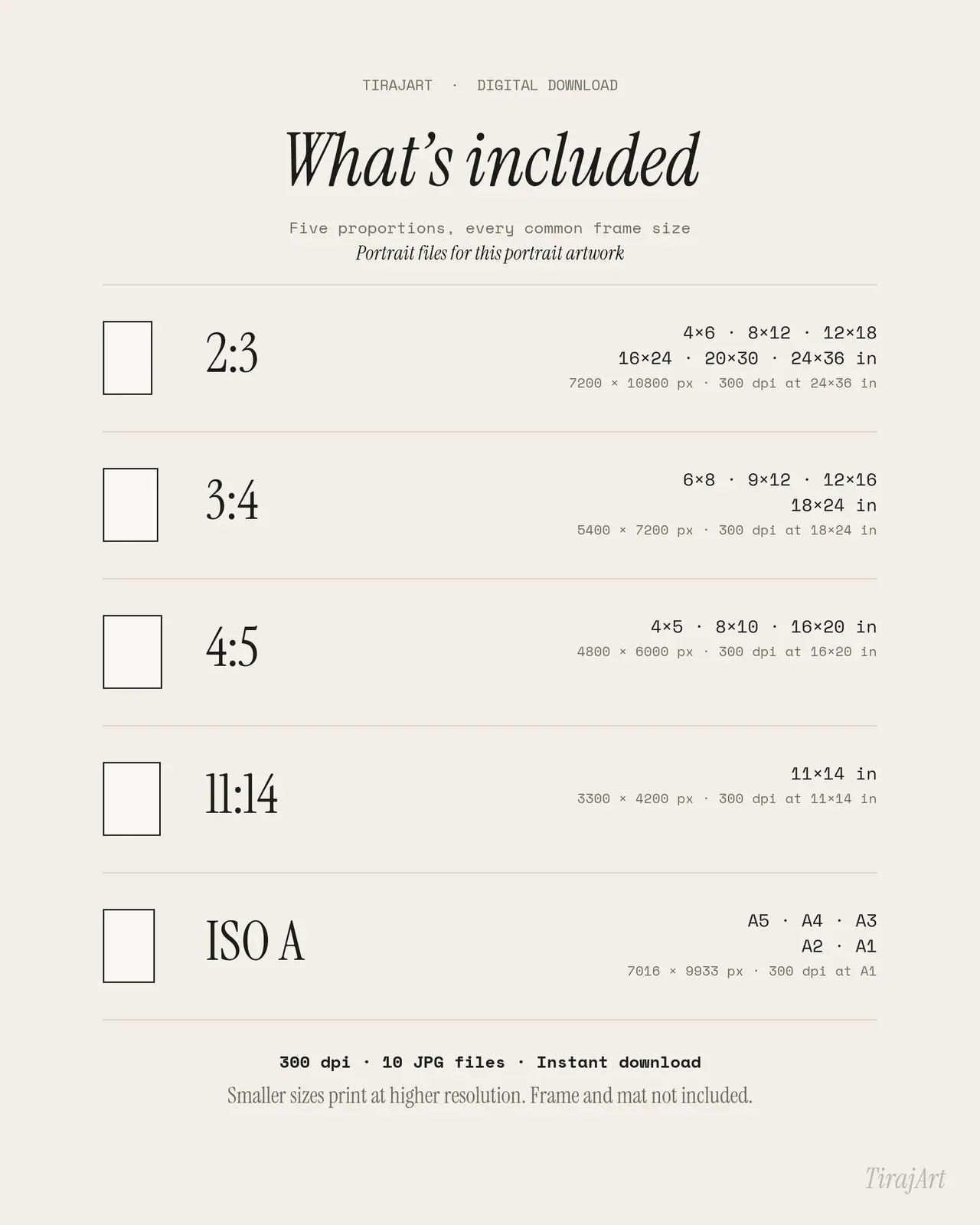
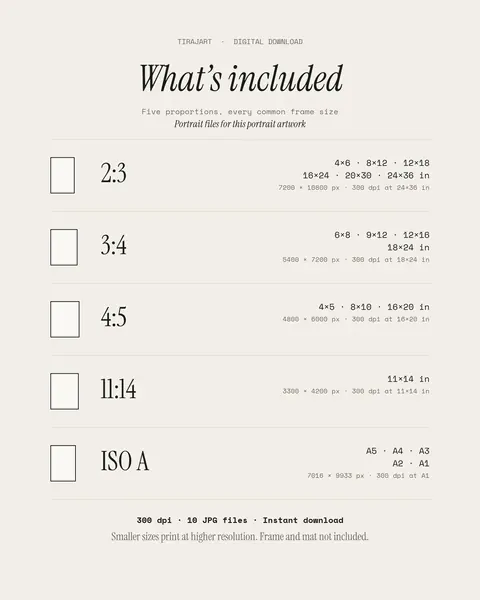
10 high-resolution JPEG files (sRGB), two per proportion:
| Ratio | Print sizes | Pixels | Resolution |
|---|
| 2:3 | 4×6, 8×12, 12×18, 16×24, 20×30, 24×36 in | 7200×10800 px | 300 dpi at 24×36 |
|---|
| 3:4 | 6×8, 9×12, 12×16, 18×24 in | 5400×7200 px | 300 dpi at 18×24 |
|---|
| 4:5 | 4×5, 8×10, 16×20 in | 4800×6000 px | 300 dpi at 16×20 |
|---|
| 11:14 | 11×14 in | 3300×4200 px | 300 dpi at 11×14 |
|---|
| ISO A | A5, A4, A3, A2, A1 | 7016×9933 px | 300 dpi at A1 |
|---|
All files are 300 dpi at their largest size.
Each proportion comes twice: with the small caption under the artwork, and plain.
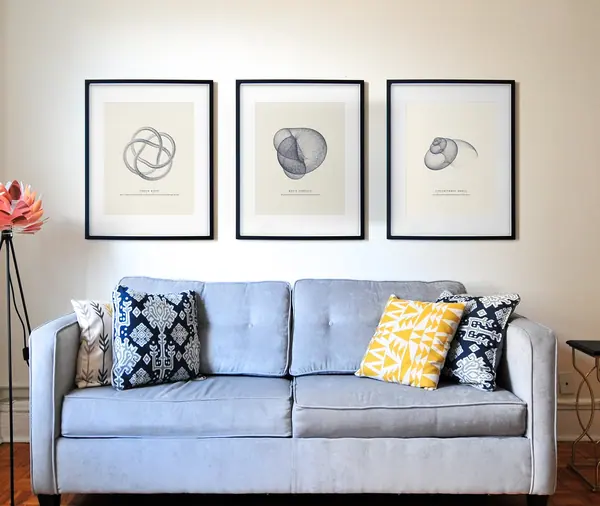
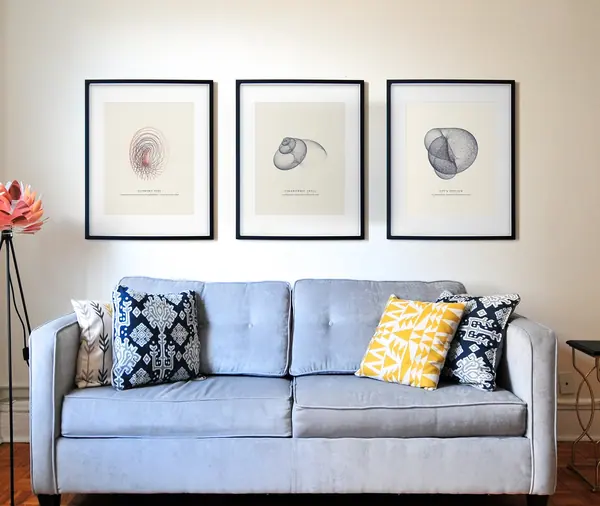
The artwork sits in the middle of the sheet with a wide paper margin, so the files frame well as they are.
Printing tips
Use heavyweight white matte paper (200 gsm or more, archival matte or cotton rag). Print at 100% / actual size, not 'fit to page', and pick the file that matches your frame.
Colours can vary slightly between screens and printers.
How to print digital wall art
License
This is an original TirajArt work. The files are for personal use only. Print them for your own home or as a gift; please don’t resell, share or redistribute the files or sell prints made from them. Full license.
Digital download: nothing is shipped, frame not included. Colours vary slightly between screens and printers.